
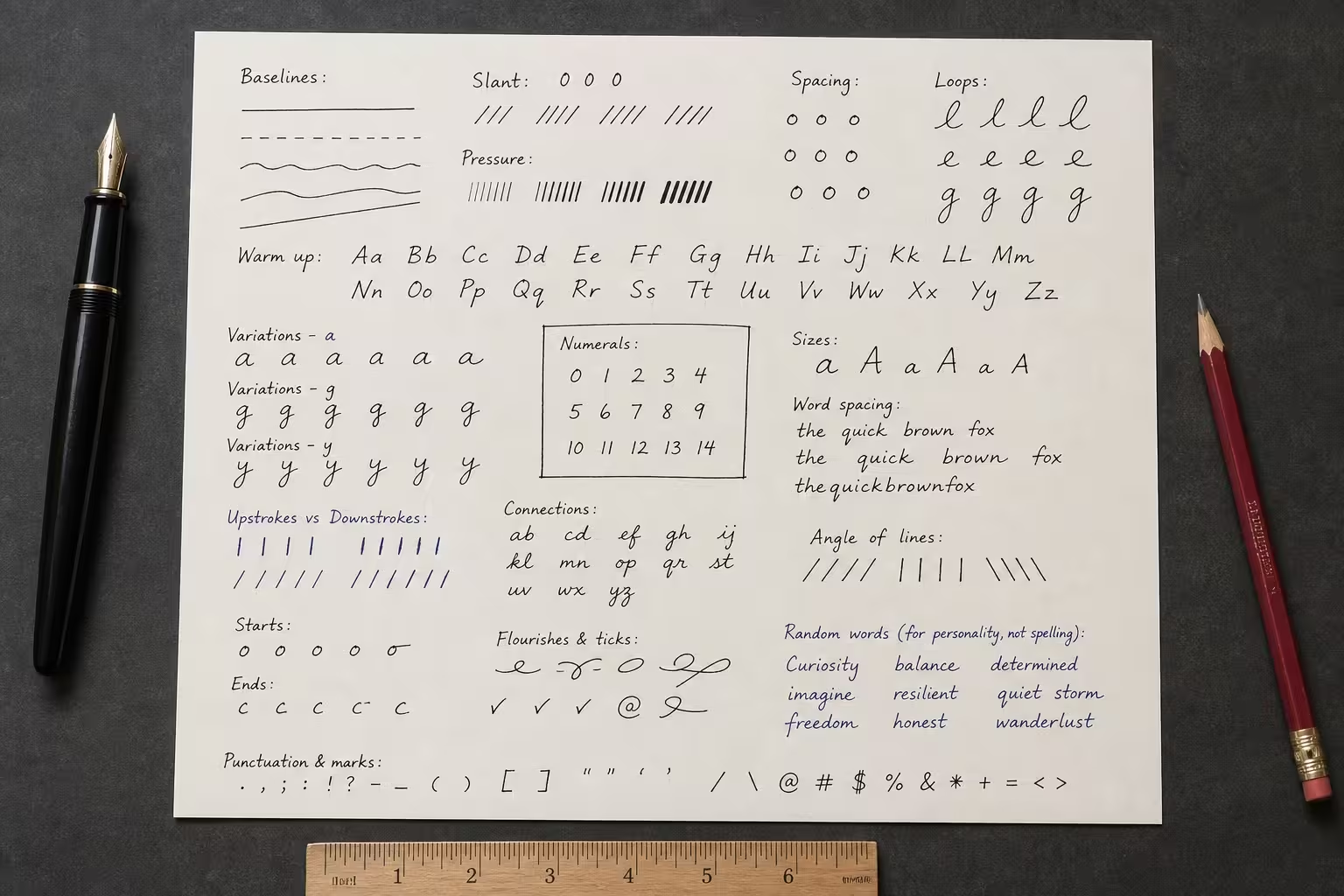
What does your handwriting size and slant say about you?
Traditional interpretations often associate large writing with visibility and social energy, while small writing is associated with concentration and privacy. Medium writing is usually described as adaptable. Measure ordinary lowercase letters rather than capitals or headings.
A right slant is commonly interpreted as emotional openness, an upright hand as restraint or analysis, and a left slant as reserve. In practice, grip, writing instruction, handedness, script, and speed can all affect slant.
How word spacing and page margins shape handwriting analysis
Close word spacing is traditionally read as a preference for connection, while wide spacing is read as a need for room or independence. Consistent spacing may simply show a practiced writing rhythm. Page margins add another layer: some writers fill every available area, while others protect a wide border.
Compare several lines before choosing a pattern. A single gap at a line break or a margin created by a narrow notebook is not meaningful evidence.
Handwriting pressure and baseline personality meanings
Heavy pressure is often described as intensity or persistence, while light pressure is described as sensitivity or flexibility. Pressure is difficult to judge from a scanned image; ink density, pen type, paper, and camera exposure can mislead.
On blank paper, a rising baseline is traditionally linked with optimism, a level baseline with steadiness, and a wandering baseline with spontaneity. Fatigue, desk angle, and lack of a guide line are simpler explanations that should be considered.
Connected, rounded and angular handwriting personality traits
Connected writing is often interpreted as sequential or systematic thinking, separate print as independent analysis, and a mixed style as flexible problem solving. Rounded forms are traditionally described as approachable, while angular turns are described as direct or analytical.
These categories are especially dependent on how someone was taught. A school script can explain letter connection and shape better than personality can.
T-bars, i-dots and loops in a handwriting personality quiz
Graphology guides often associate high t-bars with ambition, precise i-dots with attention, and broad loops with imagination or expression. The quiz groups these details with larger patterns rather than making a result depend on one letter.
- Check several examples of the same letter.
- Separate an occasional flourish from a repeated habit.
- Do not interpret a missing dot or bar from a hurried note in isolation.
Why writing pace and context change handwriting traits
Fast notes often become larger, more connected, less precise, and more variable. Formal writing may show the opposite. Mood, fatigue, pain, medication, writing surface, and the intended reader can change a sample from one day to the next.
A useful comparison looks at repeated patterns across dates and situations. It avoids treating temporary motor or environmental changes as fixed personality traits.
Signature analysis versus everyday handwriting personality traits
A signature is a repeated personal mark with a special social purpose. It may be larger, faster, less legible, more decorative, or more compressed than the writer's ordinary text. That makes it a poor substitute when a question asks about typical lowercase letters, word spacing, or a sentence baseline.
Traditional signature analysis often focuses on relative size, legibility, underline, flourish, direction, and the distance between given and family names. Those meanings are also interpretive rather than scientifically validated. A stylized signature may reflect branding, security, habit, or the need to sign quickly instead of personality.
Use a signature only when you intentionally want to compare public self-presentation with everyday writing. For this quiz, ordinary notes are the better reference. Never upload or share a real signature casually; it can be sensitive identifying information. Initials, monograms, and digital signing marks have the same context problem and should not replace a multi-line sample. If you compare samples, keep the original date, writing tool, page type, purpose, and surrounding text in mind rather than cropping one mark away from its context.
Are handwriting personality traits scientifically accurate?
Research has not established graphology as a reliable substitute for validated personality assessment. The visual categories can still be enjoyable observation prompts, but a quiz result should not be described as proof about character, honesty, intelligence, health, or future behavior.
Analyze your own writing for fun. Do not evaluate another person for hiring, diagnosis, compatibility, safety, or trustworthiness.
For context, a 2009 empirical study comparing graphologists' ratings with Big Five questionnaire results found no evidence that graphology measured those personality traits reliably. An earlier controlled study of individual handwriting elements also found that predicted relationships appeared only around chance levels. Read the 2009 validity study and the 1997 handwriting elements study for the research methods and limitations.